





Digitalization of the Water Sector in the Spotlight: Highlights of the Conference at Igor Sikorsky Kyiv Polytechnic Institute
On October 28–30, 2025, Igor Sikorsky Kyiv Polytechnic Institute hosted the international conference “Water Technologies: From Traditional Methods to Modern Trends” (online, Kyiv, Ukraine). A special focus of the conference program was placed on the digitalization of the water sector and the role of modern digital tools in water treatment, wastewater purification, water quality monitoring, and infrastructure management, as addressed within the framework of Erasmus+ project “Strengthening digital skills in the water sector higher education – DIGISKILLS”, no 101178708.
During the conference, participants discussed how digital solutions are accelerating decision-making in the water sector – from data-driven approaches and process modelling to the implementation of artificial intelligence and digital twins. Importantly, alongside technological aspects, the educational dimension was also emphasized: without the systematic development of digital competencies among water sector professionals, modernization efforts will remain fragmented.
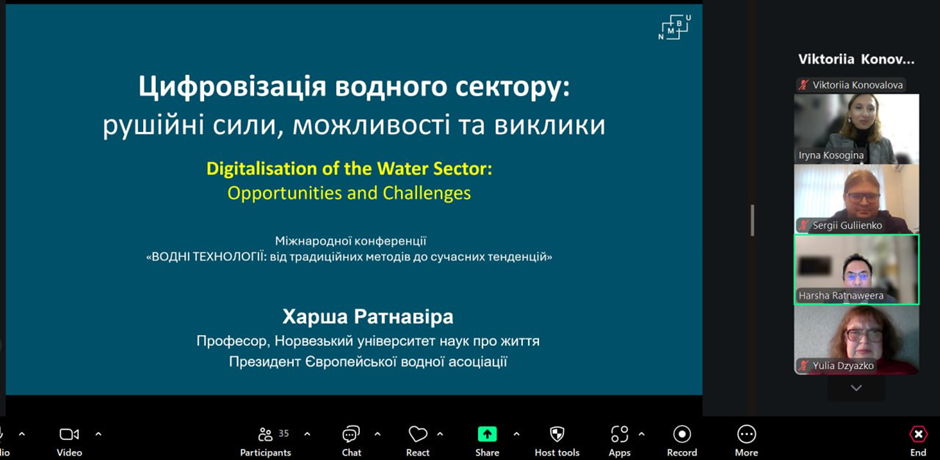
In this context, the keynote presentation by Professor Harsha Ratnaweera, “Digitalization of the Water Sector: Opportunities and Challenges”, was particularly illustrative, outlining both the potential and the barriers to the adoption of digital solutions.
The program also featured presentations by representatives of Igor Sikorsky Kyiv Polytechnic Institute, showcasing practical directions of the digital transformation of water technologies:
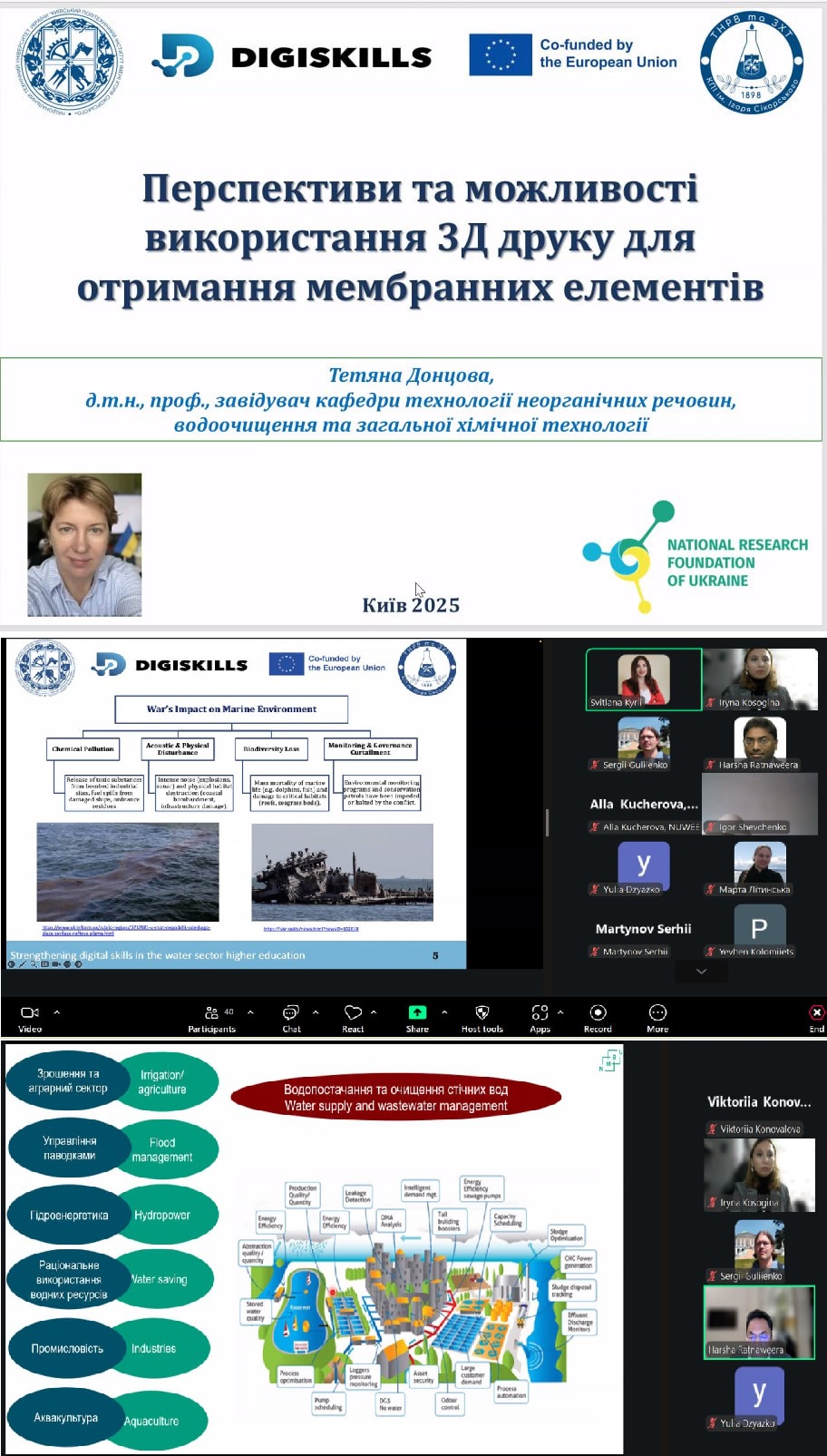
- Tetiana Dontsova presented the report “Prospects and Opportunities for Using 3D Printing in the Production of Membrane Elements”, highlighting the link between digital manufacturing, the development of membrane modules, and rapid prototyping.
- Svitlana Kyrii, in her presentation “Current Challenges of Marine Environmental Monitoring in Ukraine during Wartime”, emphasized the need for modern approaches to real-time monitoring of the aquatic environment, where digital tools and data acquisition systems become critically important under conditions of limited resources and elevated risks.
- Oleksandr Kuchynskyi presented his vision in “Perspectives of Using AI for the Digitalization of the Water Industry”, outlining the potential of artificial intelligence for data analysis, forecasting, process optimization, and enhancing the resilience of water infrastructure.
Particular attention should also be paid to the contribution of partner universities. Alla Kucherova (National University of Water and Environmental Engineering, Rivne) joined the conference and shared her experience in implementing international grant projects in the water domain, emphasizing that project-based cooperation is a key driver for accelerating the adoption of digital practices both in education and in the sector itself. In particular, the discussion highlighted results and approaches developed within several initiatives, including DIGISKILLS.
The topics and discussions addressed during the conference closely align with the objectives of the DIGISKILLS project, which aims to strengthen digital skills in higher education within the water sector, transfer best European practices of digital transformation to Ukraine and Moldova, and introduce innovative teaching methods, digital workshops, and eLearning modules. The project also includes training academic staff to apply digital solutions and upgrading the material and technical base (equipment and software) to support the digital modernization of the educational environment.
The conference at Igor Sikorsky Kyiv Polytechnic Institute became another platform where the community of researchers, educators, and students comes together around practical steps toward the digitalization of the water sector. It is precisely such events that help build the cooperation network needed to ensure that the outcomes of DIGISKILLS are translated into new graduate competencies, modern curricula, and applied solutions for the water industry.

Prof. Harsha Ratnaweera

Norwegian University of Life Sciences (NMBU) – Norges miljø- og biovitenskapelige universitet, Ås (Norway)
About project
The Department of Inorganic Substances Technology, Water Treatment, and General Chemical Technology, together with partners from nine universities in Norway, Romania, Moldova, Serbia, and Ukraine, has secured funding in the prestigious international Erasmus+ competition with the project DIGISKILLS ("Enhancing Digital Skills in the Water Sector of Higher Education").
This achievement marks a significant step towards integrating modern digital technologies into water resource management. The project's implementation will contribute to the sustainable development of Ukraine's water sector, the integration of Igor Sikorsky KPI into the European educational space, and the enhancement of specialist training to address pressing environmental challenges.
The project is coordinated by the Norwegian University of Life Sciences (Norges miljø- og biovitenskapelige universitet), located in Ås, Norway, under the leadership of Professor Harsha Ratnaweera.
The project is carried out by:
- National Technical University of Ukraine "Igor Sikorsky Kyiv Polytechnic Institute", Kyiv, Ukraine;
- Ukrainian State University of Science and Technologies, Dnipro, Ukraine;
- Lviv Polytechnic National University, Lviv, Ukraine;
- National University of Water and Environmental Engineering, Rivne, Ukraine;
- Dunarea de Jos University of Galati (Universitatea "Dunarea de Jos" din Galati), Galati, Romania;
- University of Niš (Univerzitet u Nisu), Niš, Serbia;
- Technical University of Moldova (Universitatea Tehnica a Moldovei), Chisinau, Moldova;
- State University of Moldova (Universitatea de Stat din Moldova), Chisinau, Moldova.
Why Is This Important for the University?
✅ New opportunities for students – modern educational programs aligned with European standards, integration of digital technologies, and access to European best practices.
✅ Collaboration with international partners – experience exchange with leading universities across Europe.
✅ Faculty development – enhancement of digital competencies and implementation of innovations in teaching.
Why Is This Important for Students?
- Mastering digital tools essential for future careers.
- Opportunity to participate in international internships as part of annual summer schools.
- Competitive advantages in the job market through up-to-date knowledge and skills.
Congratulations to the project team on their victory! Wishing you success in the project's implementation!